
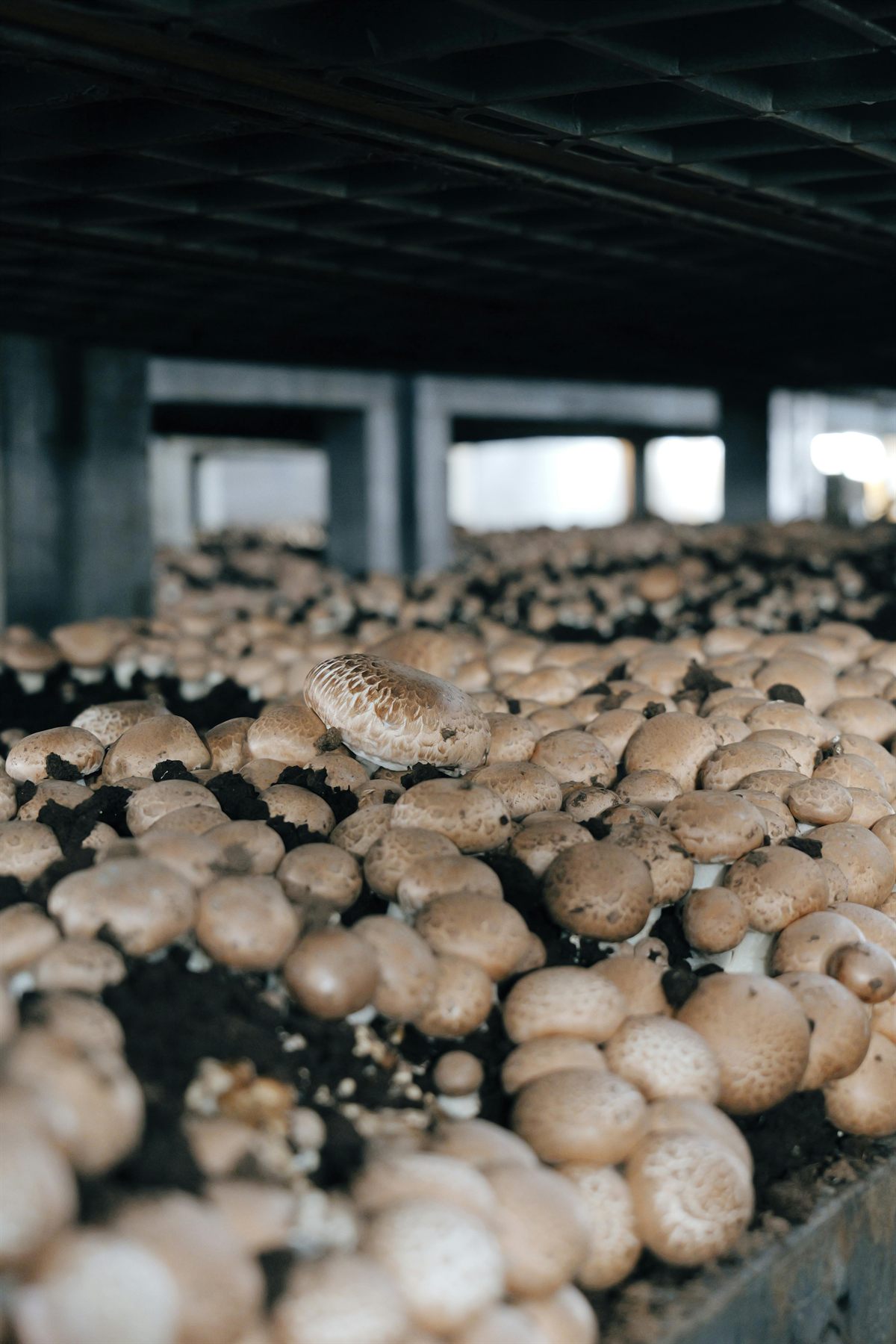
What is mycelium?
Mycelium is the vegetative part of the fungal organism; mushrooms are the fruit, or the reproductive (spore-producing) part. Just as you must grow a tree to produce an apple, you must grow mycelium to produce a mushroom. In nature, mycelium is seldom seen, as it will dehydrate if exposed to sun or wind. So it spends its life within the earth, inside a log, or under some other kind of protective mulch.
Thinking about mushrooms this way helps clear up a common beginner confusion. The mushroom we notice above the surface is only part of the organism. The larger living network is usually hidden in wood, soil, straw, compost, or another food source that the fungus is actively digesting.
Spawn as a Transfer Material
Spawn is a vehicle of transfer for mushroom mycelium as it is dispersed and mixed into a fresh substrate by the cultivator. Depending on the material to be inoculated, that carrier can be grain, sawdust, wood chips, dowels, or another support that lets the culture move into new food.
Using spawn to grow mushrooms is closer to propagating a chosen plant variety than to sowing seeds. The grower is expanding the tissue of a particular specimen or culture line, which means the new growth is a continuation of that selected mycelium rather than a brand-new genetic mix.
Substrate and Colonization
Once spawn is introduced, the mycelium begins colonizing the substrate. On straw, wood, sawdust, or enriched growing media, it spreads through the available food source and forms a denser network. Good moisture, clean handling, and the right temperature range all help that process happen more smoothly.
This stage matters because healthy colonization sets up everything that follows. Weak or slow mycelium often leads to patchy growth, contamination, or poor fruiting later on.
Why Mycelial Health Comes First
In cultivation, the condition of the mycelium usually determines how smoothly everything else will go. Strong mycelium colonizes more evenly, responds better to environmental changes, and is more likely to reach the fruiting stage without stalling. Weak or stressed mycelium may still survive, but it tends to leave gaps in the substrate and gives contaminants more opportunity to compete.
That is why experienced growers often talk about colonization as the real foundation of mushroom growing. Fruiting is the visible reward, but mycelial health is the stage that makes that reward possible.
Environment, Timing, and Contamination
Even aggressive species need the right balance of moisture, fresh air, temperature, and clean handling. If the substrate is too wet, too dry, too compacted, or exposed to competing molds and bacteria, the mycelium may struggle to establish itself. Good technique does not guarantee success every time, but it greatly improves the odds that the organism can fully occupy its food source before fruiting begins.
Seen this way, mycelium is not just a hidden phase in the life cycle. It is the working body of the fungus, doing the real labor of colonizing material, digesting nutrients, and preparing the conditions from which mushrooms can later emerge.
From Mycelium to Fruiting
When the mycelium has consumed enough substrate and environmental conditions shift in the right direction, the fungus can begin forming mushrooms. Fresh air, humidity, temperature change, and light all play some role depending on the species.
That is why cultivation is often described as guiding a life cycle rather than simply growing mushrooms. First you grow the mycelium, then you let that hidden network reach a point where it can fruit.
Continue with the related posts for more cultivation context around spawn, tissue culture, and fruiting methods.